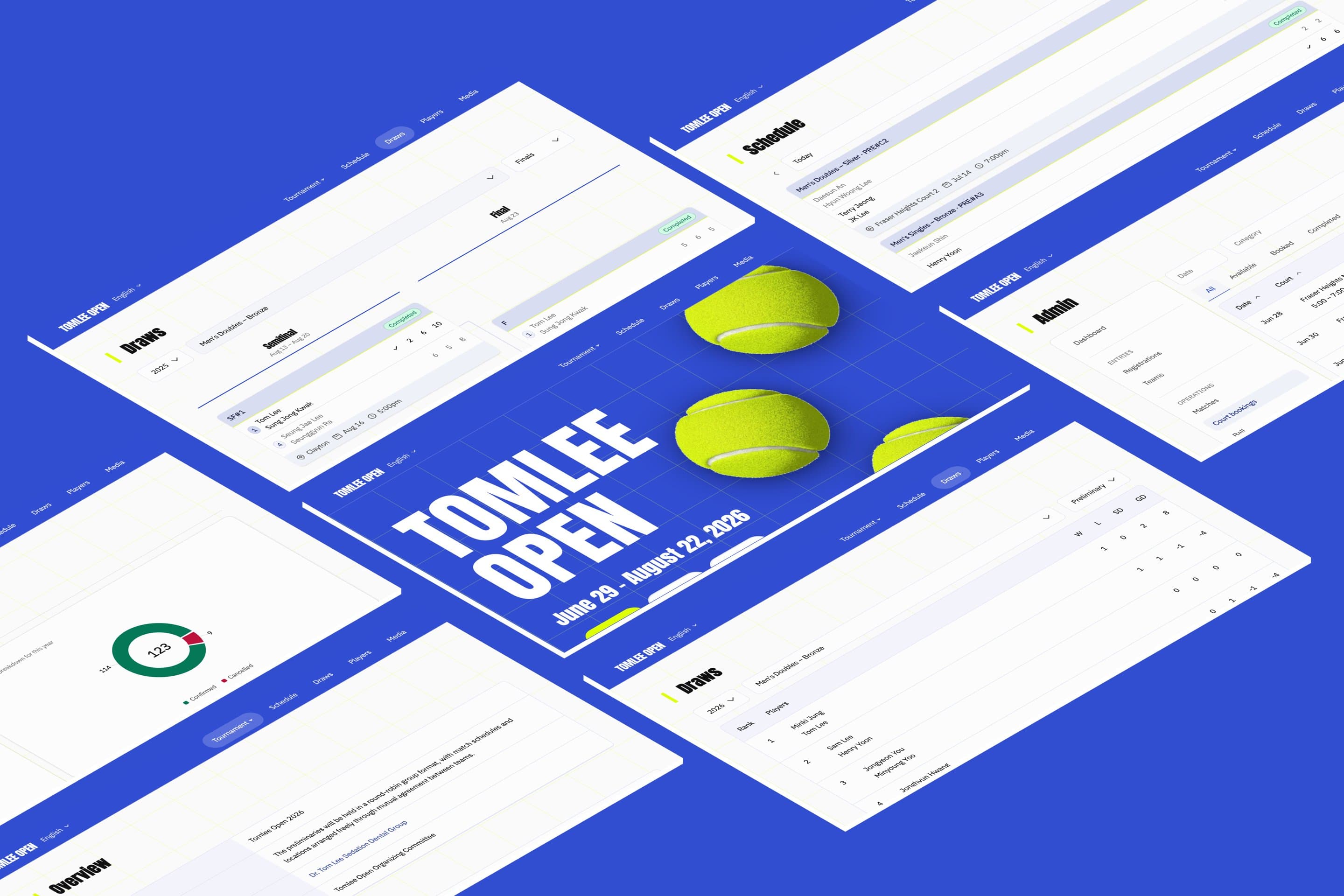
Tomlee Open is a local tennis tournament in Vancouver, founded in 2024 and run by a small organizing committee
Since 2025, I’ve been designing and building a platform that brings the tournament’s operations into one place, turning scattered coordination into a system organizers can run from and players can rely on.
- Duration
- 2025–2026
- Tools
- Figma
- Claude
- Next.js/React · Shadcn
- Prisma/Neon
- Role
- Product design
- Data modeling
- Build
The tournament grew, the process didn’t
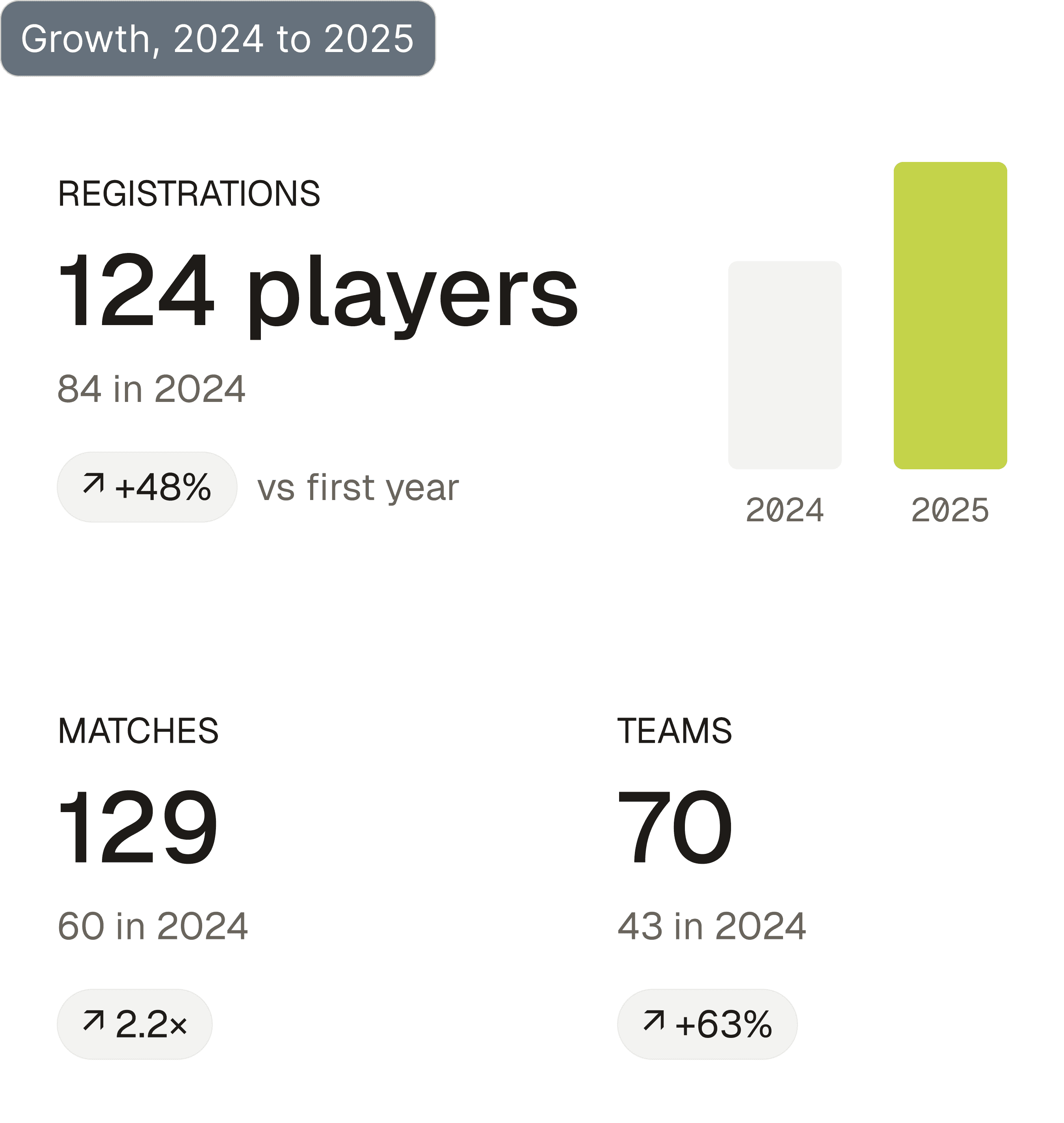
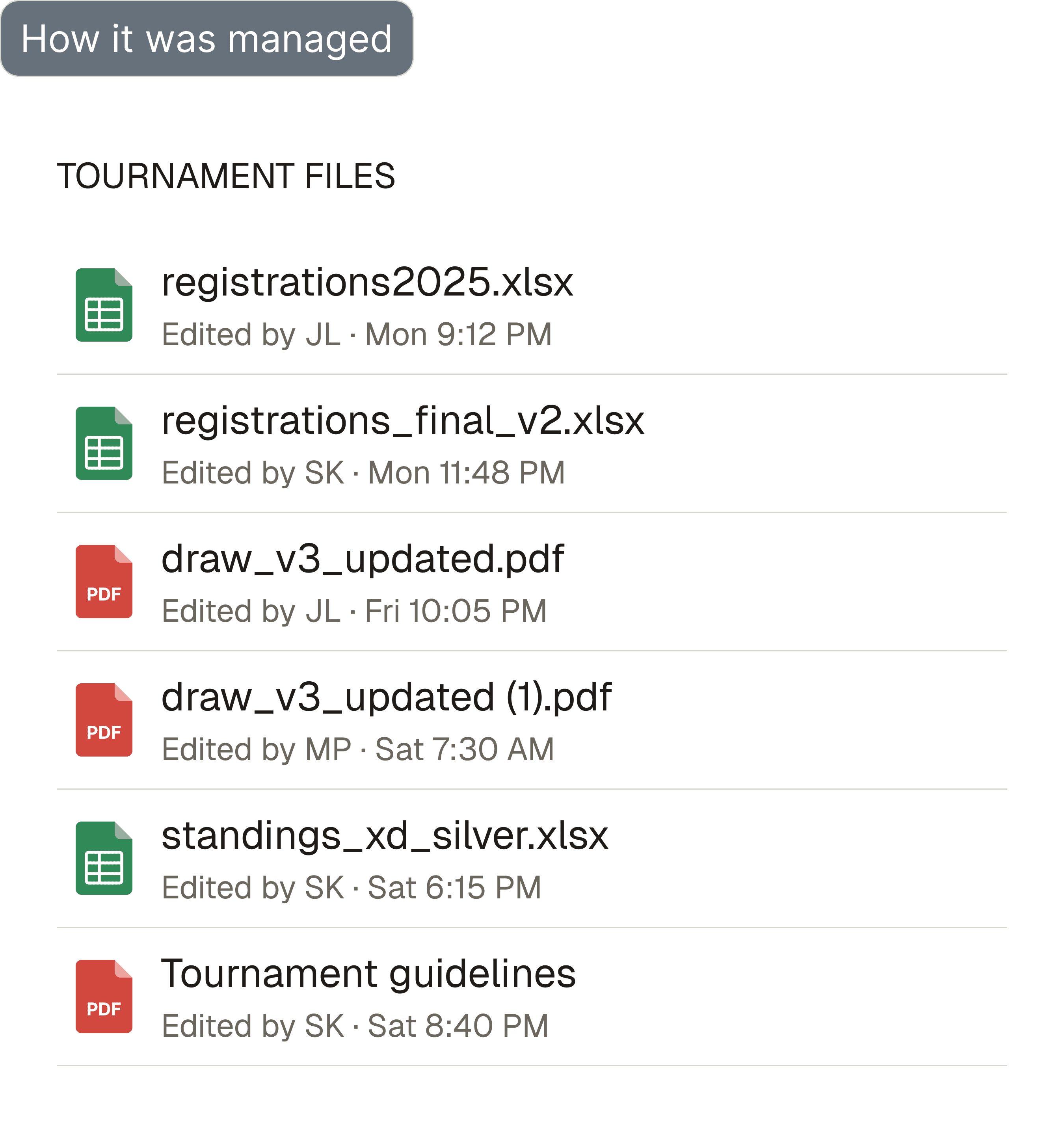
Tomlee Open was growing faster than the way it was being run. By its second year, player registration had increased by nearly 50% and the number of matches had more than doubled, but organizers were still relying on spreadsheets, PDFs, messages, and manual calculations to keep the tournament moving.
The challenge was to create one system that could scale with the tournament: reducing the coordination and rule-based work for organizers, while giving players a reliable place to follow schedules, draws, results, standings, and tournament history.
1. Mapping the data into a system
I started by mapping how tournament data moved across spreadsheets and PDFs. I wanted the new platform to:
- Reduce manual cleanup. Since the same information lived in different places, player names, categories, and match details didn’t always match.
- Reuse data across the platform. I saw an opportunity for one source of information to power different parts of the experience without being recreated each time.
The goal was to help organizers spend less time fixing things by hand, while giving players consistent information wherever they looked.
2. Turning rules into automation
Once the data was structured, I looked at how organizers were applying the tournament rules. Standings, tiebreaks, and advancement all followed clear rules, but organizers still worked them out by hand. Players often had to wait for updates, and mistakes could slip through.
I kept the same rules but let the platform handle the calculations. Organizers could spend less time checking numbers, while players could see updated results sooner and trust that they were accurate.
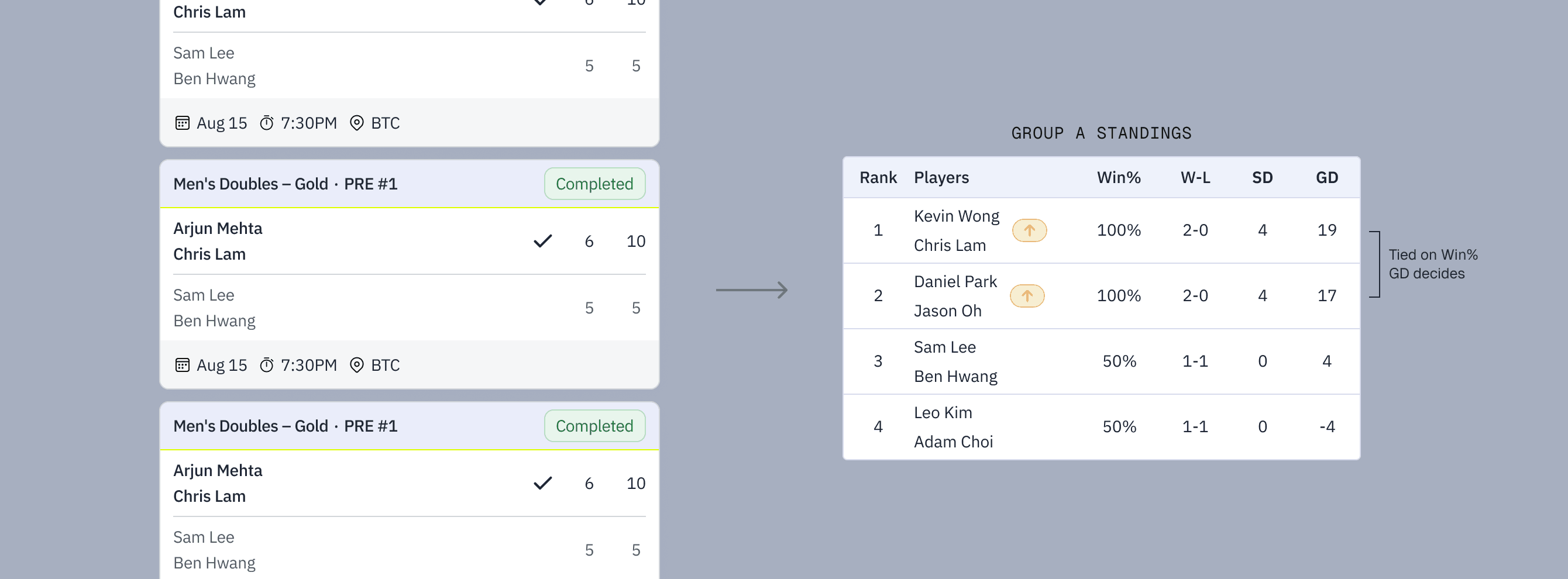
3. Designing one place to run the tournament
Once I had the foundation in place, I carried it into the admin experience so organizers could see and manage it. I wanted the admin to:
- Help players trust what they were seeing by keeping information connected to the same source.
- Make organizers' work easier by bringing tournament management into one place, so they no longer had to switch between tools to find and update information.
4. Bringing the tournament into view
Once the tournament information was connected, I focused on how players followed what was happening. I shaped the information architecture around the way a tennis tournament usually unfolds, and brought schedules, draws, results, standings, and records together in one place.
I wanted the tournament to feel easy to follow from start to finish, whether someone was checking their next match, looking at the latest result, or seeing how a category was shaping up.
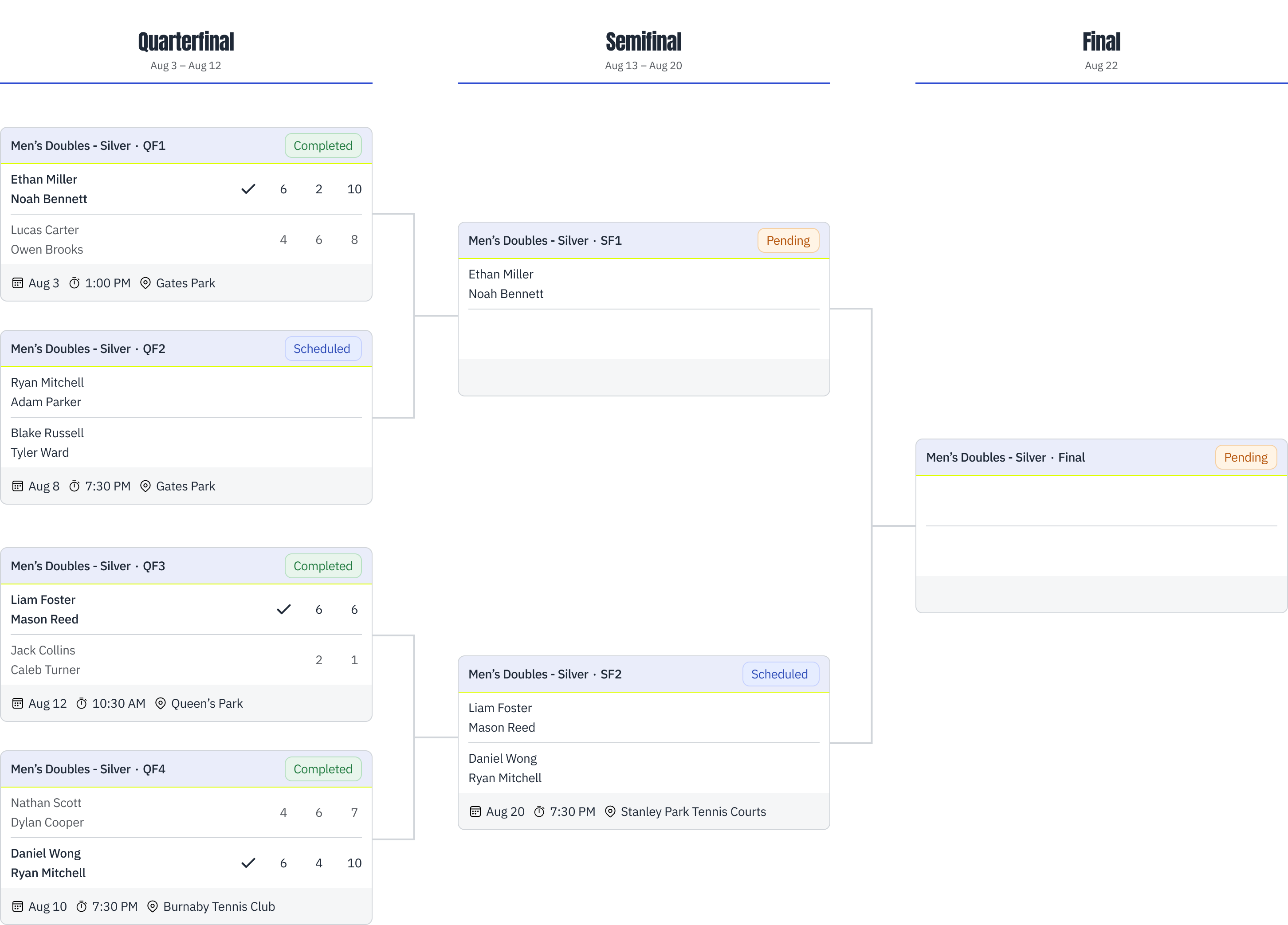
Year-over-year player growth from 2024 to 2025
Reduction in manual coordination for admin
4.8 out of 5 Satisfaction rate from participants, for consistency and ease of use.
Site adoptability of 64 surveyed participants used the site.
You can probably tell I was not designing from a distance
Because I spend a lot of time playing and following tennis, I understood both the operational friction behind the tournament and the excitement around each match. That helped me design around how the event actually runs, not just what the interface should look like.
It has been especially rewarding to bring two things I care about together, using design to make the tournament experience better for both organizers and players.